Historical Crafting: Bergamot Boxes
Have you ever randomly stumbled upon something that has been mostly lost to history and then immediately thought to yourself I must try that? Or is that just a me thing? Either way, that’s what happened to me the other day, and why I now find myself the proud owner of my very first 18th century Bergamot box.
It all started with a youtube video that showed up on my feed (sometimes the algorithm does a good job). That video piqued my interest, and so I did what I do and went down a rabbit hole of reading and experimenting, though there is limited information out there, so it was a bit of reading and a lot of experimenting. I will, however, share with you some of the fun bits that I learned, so that you can join the rabbit hole if you’d like.
I guess first and foremost, what is a Bergamot box? In short, back in the 18th century in Grasse, France, local craftspeople were using bergamot (which is a citrus fruit) for perfumes, but the peels also started being used to make little trinket boxes, which were often gifted by suitors. Eventually the boxes were reinforced, often with papier machee, to improve longevity, and were decorated with beautiful and intricate paintings. By the 19th century, Bergamot boxes had all but disappeared.
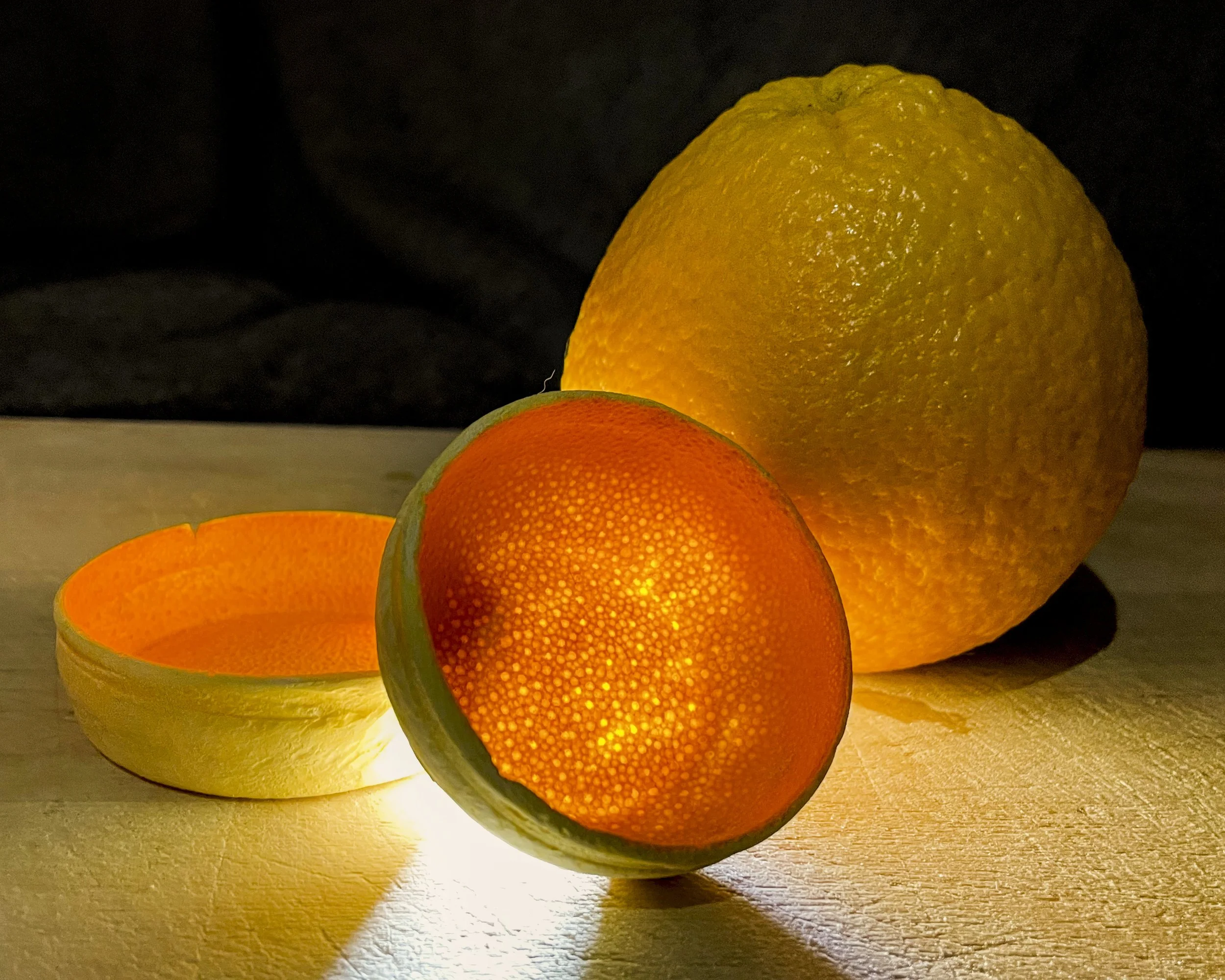
So how were these fleeting bits of history made? Turns out it’s actually pretty easy, though it does require some patience. First the fruit is cut in half and the insides (the flesh) is carefully scooped out, taking care to not damage the peel. Then the peel is soaked in hot water until malleable, and a good portion of the pith is scraped off, taking care not to damage the peel. Finally the peel is turned inside out and placed over a mould to dry and harden. Once hardened, the resulting box can be cleaned up, filed down, buffed, reinforced, and decorated. And there you have it, a delicious smelling little piece of history.
Armed with knowledge and an inflated sense of crafters confidence, I figured I could give it a shot. So off I went on the hunt for supplies. According to my reading, I would need a bergamot, some water, and a mould.
First problem was the lack of bergamots near me. All good, a navel orange should do just fine. Next problem, a mould for the box itself. I may not have a mould, but I do have a ton of different shapes and sizes of jars that I have hoarded for all my potential future projects (I know I’m not alone in the craft hoarding), so I pulled out a few of those to try them out. The last problem wasn’t really a problem at all, moreso an opportunity - I didn’t really have any definitive instructions other than the one youtube video and some vague articles. How much hot water? How hot? How long to soak it for? How much pith needs to be removed? How long does it take to dry? All sorts of questions that would really only be answered by giving it a go. (If you’re hoping that I’ll be able to give you more detailed instructions so you can make your own Bergamot box, I’m sorry to say that though I enjoy experimenting, I’m notoriously bad at measuring things or taking any notes, so I can’t really impart any solid information to you).
I cut my oranges in half and did the best i could scooping out the insides. I got a couple of small tears in the peel, but figured since this is all just an experiment that I’d keep using those peels anyways. I did start getting a bit better at scooping out without tearing the peel (I just went slower and did things bit by bit), so I had two peels that so far were intact. Hooray! Next step came soaking the peels. I boiled some water in the kettle, and poured enough over the peels that they were submerged, then left them while I ate the scooped out insides of the orange (waste not want not). Quite honestly I got distracted and forgot about the soaking peels for a while, and when I finally remembered them the water was tepid and the peels felt pretty squishy, which I took as a sign that they were ready to be flipped. Before flipping them though, I did try to scrape out a bit more of the leftover pith to moderate success.
Flipping the orange peels was a bit nervewracking. The ones that already had a small tear were a bit more fiddly since I was trying to make sure not to tear them further, but overall it actually wasn’t too bad. I just worked slowly and methodically, and I guess I had soaked the peels enough because soon enough they were inside out and ready to put on some jars.
The putting them on the mould part definitely fell into the “trust the process” category of crafts. Despite trying to use multiple rubber bands and trying to smooth the peels to the shape of the moulds, those things just kept wanting to bubble up back into their original rounded form. At some point I gave up trying and just attached them and walked away. I left them out on the counter so that I could continuously try to massage them onto the mould shape whenever I happened to see them, and over the course of the next couple of days, much to my surprise and delight, they were starting to dry out and tighten up and actually conform to the shape of the jars they were attached to! Once they were dry enough (I have no real amount of dryness I was looking for, it was just a gut feeling), I took them off the jars so that the inside had a chance to dry as well, and despite no longer being on their moulds, they kept the shape beautifully.
It has now been a week or so (I forgot to write down exactly what date I started the experiment, so I’m making a best guess) since I took them off their moulds and I’m please to say they have dried like a dream, and now make a satisfying clink sound when I tap my nails against them.
To file down the weird angles of the top edges I rubbed the box on some sandpaper until I was satisfied with it, and took some fine sandpaper to the outside to try to smooth and buff some of the rind. I haven’t yet done any papier mache reinforcement, or any painting decorations, but more playing around and experimenting is still to be done, so perhaps those will be future things to try.
I did learn a few things from my brief foray into Bergamot boxes. I used glass jars because that’s what I had, but I would be curious to see if a wooden mould would produce different results. I learned that patience really is the name of the game, and that moving slowly and intentionally gives better results. I also learned that this is a pretty forgiving craft, so for those of us who struggle with precise timings and measurements, this is an excellent option.
Overall I’m incredibly stoked with my little dip into history. I love learning new uses for things that are often discarded, I love getting to play and try out crafts that don’t require expensive equipment, and above all I love getting to play and experiment and learn something new.
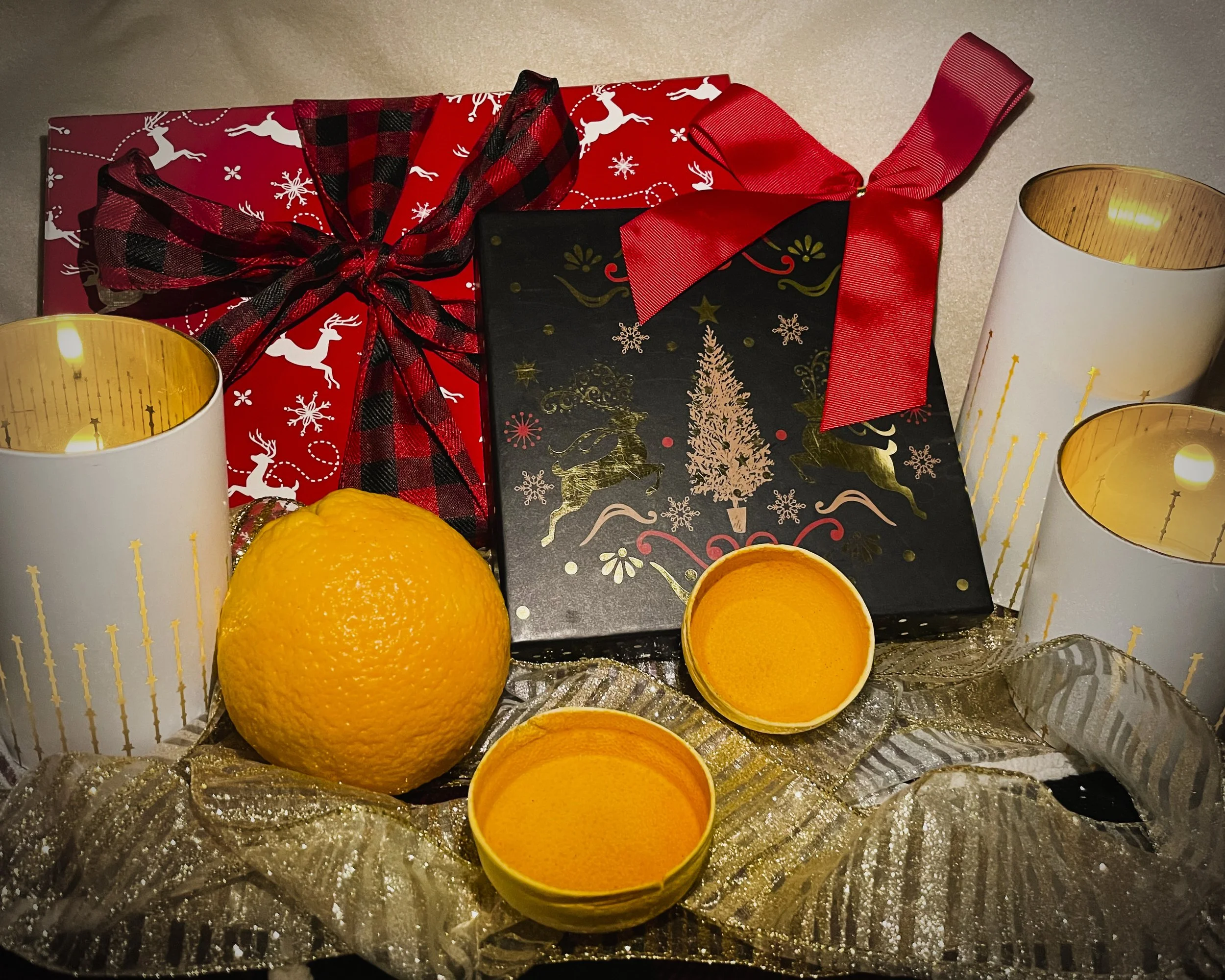
This is a craft that I wholeheartedly endorse giving a shot. Best case scenario you have a beautiful (and delicious smelling) little trinket box (or tray - I still haven’t figured out how to get the two pieces to fit together like a box - I think I need a better mould for that), worst case scenario you got to eat some oranges and live like an 18th century craftsperson for a few days. It’s a no lose situation, so have fun playing around, being creative, and making a thing!